

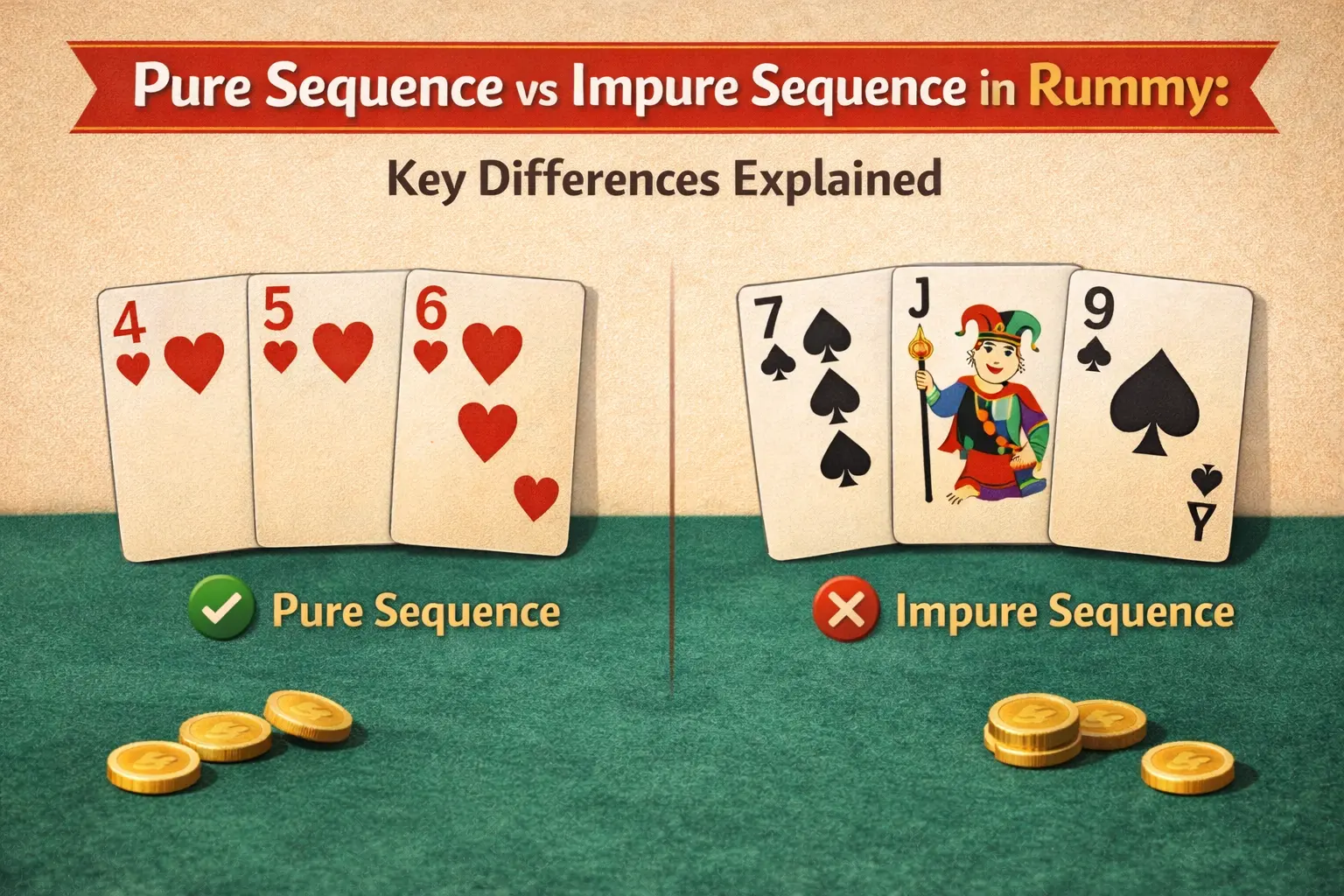
One of the most important concepts in rummy is understanding the difference between a pure sequence and an impure sequence. Many beginners lose games simply because they misunderstand this rule.
This guide explains both types of sequences clearly with examples.
What Is a Pure Sequence?
A pure sequence is a group of three or more consecutive cards of the same suit without using any joker.
Example:
- 3♣ – 4♣ – 5♣
Rules for a pure sequence:
- Same suit
- Consecutive order
- No jokers allowed
A pure sequence is mandatory for a valid declaration.
What Is an Impure Sequence?
An impure sequence uses a joker as a substitute card to complete a sequence.
Example:
- 6♦ – Joker – 8♦
Rules for an impure sequence:
- Joker replaces a missing card
- Still must follow suit order
- Valid only if a pure sequence already exists
Key Differences Between Pure and Impure Sequences
| Feature | Pure Sequence | Impure Sequence |
|---|---|---|
| Joker usage | ❌ Not allowed | ✅ Allowed |
| Mandatory | ✅ Yes | ❌ No |
| Declaration valid alone | ❌ No | ❌ No |
| Importance | Very high | Supportive |
Why Is a Pure Sequence Mandatory?
The pure sequence rule ensures that:
- Skill plays a major role
- Jokers are not overused
- The game remains fair
Without a pure sequence, any declaration is considered invalid, regardless of other combinations.
Common Beginner Mistakes
- Using jokers in a pure sequence
- Declaring with only impure sequences
- Misidentifying wild jokers
Understanding these differences prevents costly errors.
Final Thoughts
Knowing the difference between pure and impure sequences is essential for winning rummy games. Beginners should always focus on forming a pure sequence early before working on other combinations.