

Table of Contents
Introduction
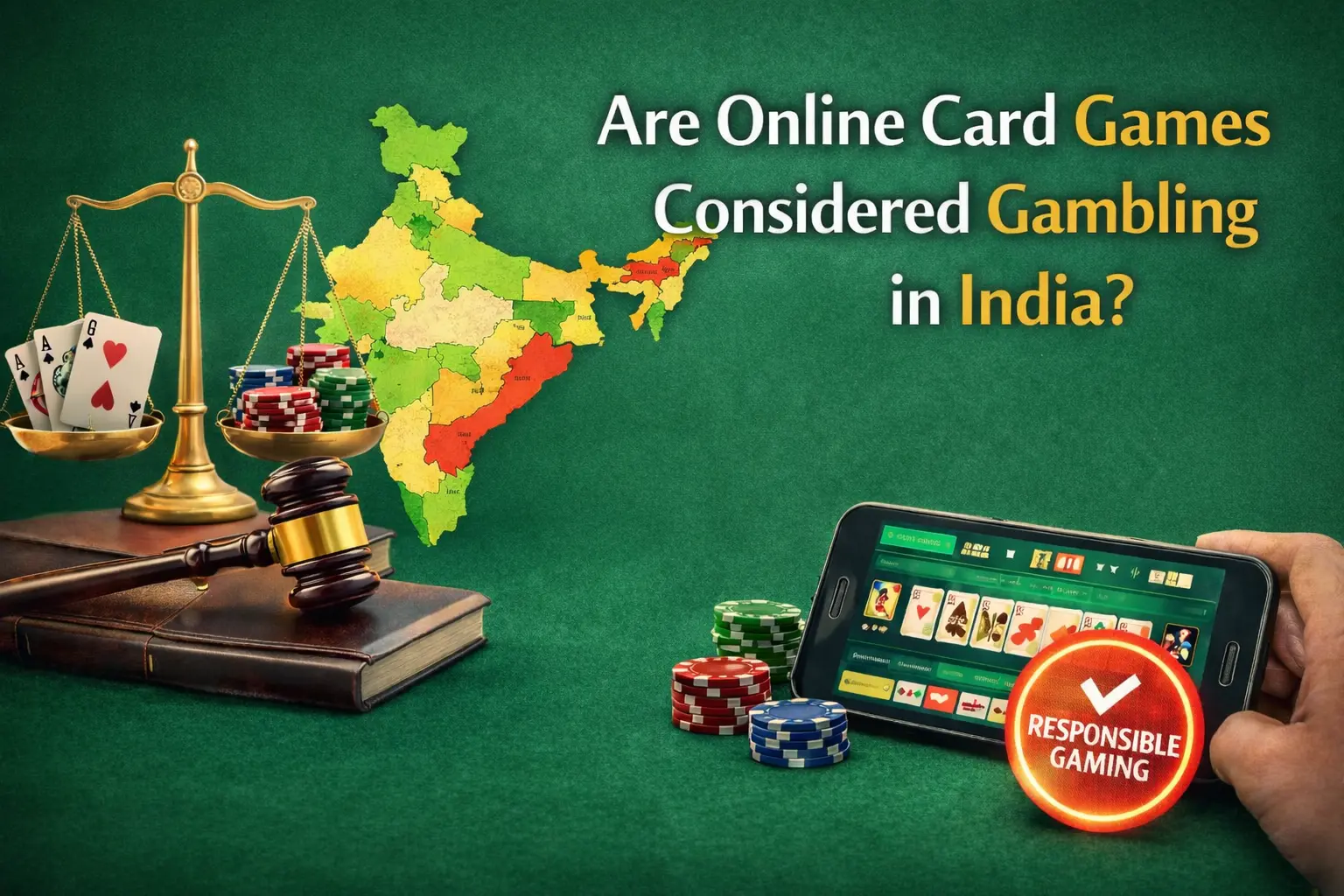
With the rapid rise of digital gaming, many players are asking an important question: are online card games considered gambling in India? The answer depends largely on how Indian law distinguishes between games of skill and games of chance.
This distinction is crucial because not all card games are treated the same under Indian gambling laws. In this article, we explain how online card games are viewed legally, why some are permitted, and what players should understand before participating.
⸻
How Indian Law Defines Gambling
Indian gaming regulations are primarily influenced by the Public Gambling Act of 1867 and various state-level laws. Under this framework, gambling typically refers to games where chance dominates the outcome.
However, Indian courts have consistently held that:
• Games of skill are not considered gambling
• Skill-based games are treated differently from chance-based games
This legal interpretation forms the foundation for how online card games are regulated today.
⸻
Skill-Based Games vs Gambling: The Key Difference
Understanding the difference between skill and chance is essential when discussing online card games.
What Makes a Game Skill-Based?
A skill-based game relies mainly on:
• Strategic thinking
• Player decision-making
• Experience and practice
In contrast, gambling games depend primarily on random outcomes, with little control from the player.
This is why debates around skill based games vs gambling are central to online gaming legality in India.
⸻
Are Online Card Games Gambling in India?
So, are online card games considered gambling in India?
The Legal Perspective
Indian courts have repeatedly ruled that certain card games—most notably rummy—are games of skill rather than gambling. This reasoning applies whether the game is played offline or online, as long as the core gameplay remains skill-driven.
As a result:
• Skill-based online card games are generally not classified as gambling
• Chance-based card games may fall under gambling restrictions
⸻
Why Rummy Is Treated Differently
Among card games, rummy often receives special legal clarity.
Reasons Include:
• Strong emphasis on strategy and memory
• Requirement to form valid sequences
• Limited influence of random outcomes over time
This is why many legal discussions focus on rummy gambling or skill and consistently conclude it falls into the skill-based category.
⸻
State-Wise Variations in Online Card Game Laws
India allows states to regulate gaming individually, which leads to differences across regions.
What This Means for Players
• Some states allow online skill-based card games
• Others may impose restrictions or bans
• Laws can evolve due to court rulings or amendments
Players should always be aware of local regulations before participating.
⸻
Online Card Games and Real Money Play
Another common concern is real-money gaming.
In India:
• Skill-based games played for money are generally permitted
• Legality depends on state laws and platform compliance
Reputable platforms ensure transparency, fair play, and adherence to local regulations.
⸻
How Platforms Stay Legally Compliant
Responsible platforms take steps to align with Indian laws by:
• Offering only skill-based formats
• Restricting access in certain states
• Clearly explaining rules and terms
This approach helps avoid confusion around online card games gambling India debates.
⸻
FAQ
Are all online card games considered gambling?
No. Only games where chance dominates outcomes are treated as gambling.
Is online rummy considered gambling in India?
No. Rummy is widely recognized as a skill-based game by Indian courts.
Do state laws affect legality?
Yes. Online gaming laws can vary by state.
⸻
Conclusion
So, are online card games considered gambling in India?
The answer is no—at least not all of them. Indian law clearly distinguishes between skill-based games and gambling, and many online card games fall into the skill category.
Understanding this distinction helps players make informed decisions and choose platforms that operate transparently and responsibly.
If you want explore about another blog you can read here.
⸻